Spring Tide Photography across Lyme Bay’s Carved Shores



Reading Tide Tables and Lunar Cycles
Study official tide timetables for Lyme Regis, Charmouth, and nearby reference ports, noting time differences along the bay. Cross-check moon phases to anticipate especially low ebbs around new and full moons. Arrive early, scout exit routes in daylight, and plot compositions that will reveal themselves precisely when rock shelves emerge, giving you minutes—sometimes less—before the ocean turns and urgency returns.
Swell, Set Waves, and Safe Windows
Even on calm forecasts, long-period swell can surprise you with surging sets that overrun platforms without warning. Observe wave rhythm for at least a full cycle, tracking the largest pulses. Place your tripod above splash lines, avoid cliff base chokepoints, and never step onto algae-glazed rock when distracted by light. The difference between unforgettable frames and dangerous mistakes is measured in patient observation.
Escape Routes and Cut-Off Awareness
Study the coastline’s shape to avoid getting trapped by a rising tide curling around headlands. Identify multiple retreat paths, marking safe shingle ramps, staircase exits, and wide shelves that remain passable even as water advances. Share your plan with a friend, carry a whistle or light, and turn back early if the ocean’s speed, wind direction, or your own energy levels shift against you.
Stones That Tell Time: Ledges, Pools, and Arches
01
Monmouth Beach’s Ammonite Ledges
When the spring ebb is generous, parts of Monmouth Beach reveal astonishing ammonite pavements and lightly flooded ledges that shimmer at dawn. Frame fossils as guiding motifs without stepping on or dislodging them. Use a polarizer sparingly to control glare, retaining delicate reflections. Low perspectives emphasize spirals, while telephoto compressions stack contours, hinting that time, tide, and biology share the same circular handwriting.
02
Red Cliffs and Coastal Openings West of Lyme Regis
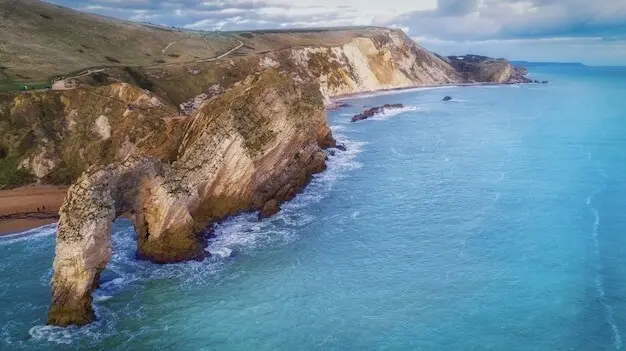
Toward East Devon, iron-rich cliffs glow warm under low sun, and smaller sea openings sometimes appear between ledges and buttresses. Scout at extreme ebb to understand safe alignments for backlit silhouettes. Look for triangulated shapes, converging strata, and wave patterns that frame apertures naturally. Keep distance from unstable slopes, watch for falling debris, and let wind-borne spray add halation that softens hard geological edges beautifully.
03
Lines, Textures, and Negative Space on Wet Rock
Wave-cut platforms provide instantly compelling geometry, yet restraint elevates results. Leave intentional gaps—negative space—that invite the eye to wander. Use diagonal grooves to guide movement, alternating slow-shutter silk with tack-sharp textures. Maintain clear subject hierarchy: a reflective pool anchoring foreground, ledges steering midground, and an arch or headland completing the story. Simplicity sings loudest when the ocean’s voice remains the dominant melody.
Light Choreography: From Pink Dawn to Indigo Dusk
Tools Built for Salt and Spray

Approaches from Lyme Regis toward Monmouth Beach
Exploring Westward Ledges toward East Devon
Fossils, Nesting Birds, and Leave No Trace